



Scientists from NTU Singapore and Nepal collaborate to provide safe drinking water for Nepal’s school children

Kathmandu: Nearly half of the total population of Nepal resides in the Terai region and 90% of them rely on groundwater as their major source of drinking water.
Research works have shown that the groundwater in the Terai region is contaminated with a cancer-causing toxic chemical, arsenic, and is a public health threat.
Despite the severe health effects of arsenic exposure through drinking water, people are not very serious about the problem.
To help prevent health damages from arsenic toxicity, scientists from Nanyang Technological University (NTU), Singapore, and Nepal have constructed a clean water facility for school families in Shree Janta Secondary School in Sukrauli, Nawalparasi district.
The clean water facility comprises three 1,000-litre tanks arranged in descending order.
The first tank helps in water clarity through sedimentation. The water is then passed to the filter unit that contains rusted iron nails kept onto brick chips, and then layers of fine sand, coarse sand, and gravel of specified sizes.
The third tank is for storage of treated water, from where the water goes to taps for drinking.
The filter system is efficient in the removal of turbidity, iron, arsenic, and bacteria present in water.
A similar filter system constructed by the NTU-Nepalese team at Shree Saraswati Secondary School in 2020 has shown a positive impact on more than 300 students and their communities.
The removal filter system is simple, which makes it a sustainable option when we consider operations and maintenance in the long run, said Professor Shane Snyder, Executive Director of NTU’s Nanyang Environment and Water Research Institute (NEWRI), which provided the engineering and technical expertise for the water facility construction through its philanthropic arm NEWRI Community Development (NEWRIComm).
The filter facility was constructed with support from the Lien Environmental Fellowship (LEF), a non-profit program that empowers leading academics and researchers from ASEAN, South Asia, and Central Asia to tackle water and sanitation challenges in their home countries.
Aside from ensuring sustained pure water access, the project team will also be embarking on education campaigns at the school to educate and raise awareness about arsenic-induced health risks in the community.
“Many local people living in the school area are not sufficiently aware of the health risks of contaminated water and thus are not ready to change their behavior.
We believe young children can become change agents within their own communities, once we empower them with the right knowledge,” said Dr. Makhan Maharjan, who obtained a Ph.D. from NTU and is now a LEF fellow and coordinator of the initiatives.
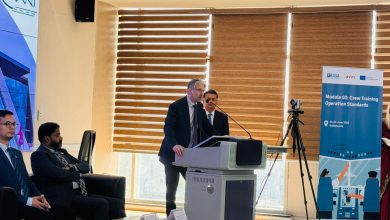
The water facility at the Shree Janata Secondary School was handed over to the school management committee on Wednesday, 15 June 2022, at a ceremony attended by NTU Singapore and the local team, and it is expected to benefit more than 600 students and staff of the school.
The scientists will next be focusing on water quality research at the Bagmati River which runs through the Kathmandu Valley.
The findings of the study are expected to reveal the extent of water pollution and help to advocate for the preservation of the river in the future.



प्रतिक्रिया राख्नुहोस्