

LPG Supply to Kathmandu Maintained Through Bottling Outside Valley
Chitwan: Efforts have intensified to maintain the supply of cooking LPG in Kathmandu Valley after the collapse of the Prithvi Highway at Krishna Bhir in Dhading disrupted the normal supply route to the capital.
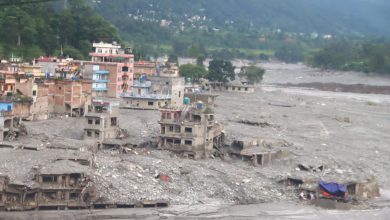
The road disruption comes amid wider transport difficulties following the collapse of a road in the Naubise–Malekhu section along the Prithvi Highway at Krishna Bhir in Dhading after flood-related damage in Rasuwa and downstream areas. LPG bullets heading towards Kathmandu have been unable to reach the Valley through the regular route, affecting the movement of gas to outlets.
To prevent a supply shortage, LPG companies have begun bottling gas at plants outside the Valley and transporting filled cylinders to Kathmandu through available routes after the state-owned Nepal Oil Corporation (NOC) permitted such arrangements.
Gas industrialists, including Nepal LP Gas Industry Association President Diwan Chand and former presidents Shiva Ghimire and Gokul Bhandari, have been coordinating with transport operators and industries outside the Valley to facilitate the supply.
Bhandari said empty cylinders from Kathmandu are being transported to plants outside the Valley, where they are filled and brought back to the capital. Cylinders from his Nepal Gas operation are currently being bottled at Nepal Gas Gandaki in Chitwan.
Several companies have already started the arrangement. Baba Gas in Chitwan has dispatched 1,500 Shree Gas cylinders, while Sai Baba Gas has sent 900 cylinders and Nepal Gas Gandaki has filled 1,200 cylinders for Balaju. Similar arrangements are underway in Birgunj, Nawalparasi and Hetauda.
STC Gas of Salt Trading Corporation is being bottled at Manoj Gas in Birgunj. Other companies unable to transport LPG bullets to Kathmandu are also coordinating with plants in Bara, Parsa, Chitwan, Makwanpur and Nawalparasi to fill cylinders and transport them to the Valley.
Association member Bimal Kalakheti said the industries are working to bring empty cylinders outside the Valley, bottle them, and return the filled cylinders to Kathmandu.
There are 16 gas industries in Kathmandu and neighbouring districts involved in coordinating the supply arrangements, according to the association.
Association President Chand said around 40,000 cylinders are required daily in Kathmandu under normal circumstances. However, consumption has currently increased significantly, reaching as high as 100,000 cylinders a day.
Nepal Gas, which normally sells around 11,000 cylinders daily in the Valley, is preparing to supply 8,000 to 10,000 cylinders a day through the alternative arrangement within the next few days.
Chand said around 40 percent of the LPG bottled by Nepal’s 58 gas industries is consumed in Kathmandu Valley. He added that a large truck can carry around 500 filled cylinders and approximately 600 empty cylinders, helping companies increase supply through alternative routes.
Gas industry officials have ruled out an overall shortage of LPG, saying the immediate challenge is transportation and bottling following the highway disruption rather than a decline in imports.
According to Chand, Nepal imported 60,200 metric tonnes of LPG from India last month, the highest volume so far, and imports are continuing at a similar rate.
The government and concerned agencies are continuing efforts to clear the damaged section of the highway and restore road connectivity. Meanwhile, gas companies are coordinating with industries and transport operators outside the Valley to maintain regular LPG supplies to Kathmandu.


Comments