


Nepal Exporting Over Rs 125 Billion Worth of IT Services Annually
Kathmandu, Feb 11: Nepal’s information technology (IT) sector is generating more than Rs 125 billion annually through service exports, stakeholders said during an interaction programme held in the capital.
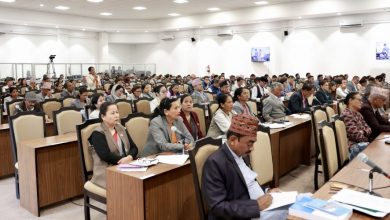
Speaking at a discussion titled ‘Nepal’s IT Industry: Status, Opportunities and Challenges’, organised by the Society of Economic Journalists-Nepal (SEJON) on Wednesday, participants stressed that the country has significant potential to expand its IT industry and boost the national economy.
Citing a study, President of the Nepal Association for Software and IT Services Companies (NAS-IT), Gaurav Raj Pandey, said Nepal exported IT services worth Rs 67 billion in 2022. He added that since then, the sector has been generating over USD 1 billion annually from service exports.
In a presentation on digital services and Artificial Intelligence (AI), Pandey emphasised that strengthening the IT sector could substantially contribute to economic growth. He urged Nepal not to miss the ongoing IT-driven global transformation, noting that developed countries are heavily investing in the sector. He also stressed the need to create an investment-friendly environment to attract both domestic and foreign investment.
NAS-IT General Secretary Alisha Shrestha said the number of IT companies and skilled professionals has been steadily increasing in recent years. She informed that 80 companies are currently affiliated with NAS-IT, a non-profit organisation promoting innovation and entrepreneurship in Nepal’s software and IT industry.
Similarly, NAS-IT Treasurer Abhay Paudel stated that the IT sector has firmly established itself as a service-based industry in Nepal and called for greater focus on its development and promotion.
Paudel outlined an ambitious goal of increasing IT service export earnings from the current USD 1 billion to USD 30 billion and creating 500,000 jobs within the next decade. To achieve this, he highlighted the need for strong policy support from the government.
He proposed significant tax incentives, including reducing income tax to below five percent for at least 10 years to encourage IT professionals and attract foreign currency inflows. Referring to countries such as Vietnam and the Philippines, he said similar tax benefits had contributed to rapid growth in their IT sectors.
Paudel also suggested prioritizing Nepali IT companies in government software procurement projects up to Rs 100 million. For large foreign contracts, he recommended that 30–40 percent of the work be carried out in partnership with Nepali firms to facilitate skill and technology transfer.
Additionally, he emphasized the importance of integrating IT and AI education into school curricula from grade five onwards and addressing the gap between academic education and industry requirements, noting that many university graduates still require industry-specific training.
He further proposed establishing a dedicated IT Promotion Board, similar to the Tourism Board, to address sectoral challenges and promote Nepal’s IT industry globally.
Paudel also suggested that the government consider signing double taxation avoidance agreements with major markets such as the United States, the United Kingdom, and Australia to attract more foreign investment into Nepal’s growing IT sector.



Comments