


Paper on new bill for integrating three major Acts related to mass media made public
Kathmandu: The Ministry of Information and Communications has released a concept paper prepared for drafting the National Communications Bill, aiming to make the mass communication sector timely, integrated and accountable.
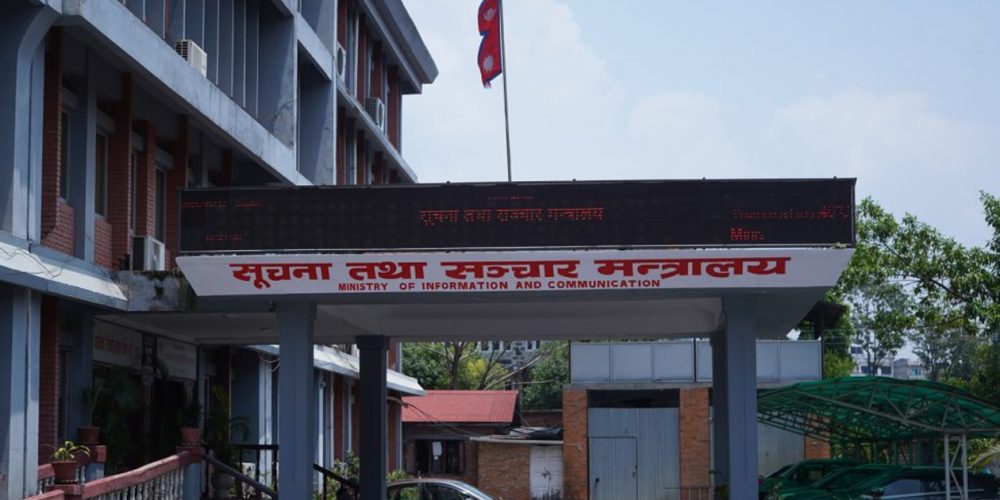
The ministry has said that it is moving forward with the necessary preparations with the goal of registering the bill in parliament within this fiscal year.
The concept paper states that a new integrated law is needed to effectively implement the freedom of speech and expression guaranteed by the constitution, the right to communication, and the right to information, while addressing rapid advancements in information technology, the expansion of digital and online media, and the diversification of the broadcasting sector.
For that, a proposal has been made to introduce a single umbrella law to replace the currently prevailing Printing and Publication Act, 2048, the National Broadcasting Act, 2049, and the Act concerning Working Journalists, 2051. According to the ministry, simply making minor amendments to these acts alone is not enough to meet current needs, so a new unified law is necessary.
The new act aims to make the mass communication sector fair, independent, transparent, respectable, and professional, while further strengthening democratic governance. It has also been stated that legal grounds will be provided promptly for the institutional development of media organisations, accountability, good governance, and the rights, interests, services, facilities, and protection of working journalists.
The ministry has stated that a new law is also needed to address the requirements seen during the implementation of the Information and Communication Technology Policy and the National Mass Communication Policy, 2073.
The ministry said it is preparing a draft bill to bring topics like archiving of mass media, licensing, regulation, institutional development, production and distribution of television signals, permissions, renewals, and technical monitoring under a single legal framework.
It is believed that this will make it easier to legally address the latest developments and technological changes in the communications field.
After the new law is implemented including topics of the concept paper, an integrated law related to mass communication will be established, the professionalism and credibility of the communication sector will be enhanced, the freedom of the press and expression will be protected, the institutional development and good governance of media organizations will be promoted, the management and regulation of online media will become effective, television signals and cable distribution will be organized, and the rights and interests of working journalists will be further secured.
Similarly, the concept paper mentions, as the main rationale for the new law, the need for clear regulation of digital publishing and broadcasting, a legal framework in line with federal governance, strengthening the professionalism, transparency, and accountability of media, the lack of a clear legal basis for regulating online media, and managing new communication services like OTT (over-the-top).
The concept paper mentions that the proposed bill shall include provisions related to newspapers, online media, broadcasting and frequency management, general communication regulations, the services, conditions, and benefits of working journalists, offences, penalties and appeals, and the establishment of a journalists’ welfare fund.
According to the ministry, the concept for the new bill was developed based on the Information and Communication Technology Policy and the National Mass Communication Policy of 2073, which were prepared using ‘rational’ and ‘mixed’ methods. No separate new structure is needed for the implementation of the proposed law, according to the concept paper.
It has been proposed in the concept paper to implement the provisions through the currently operating Department of Information and Broadcasting.
The ministry has stated that necessary opinions, suggestions and consultations will be taken from the relevant ministry, government agencies, concerned organisations, and individuals during the drafting of the bill.
RSS


Comments