


Wildlife at risk in Sikta Canal: urgent need for conservation-friendly design
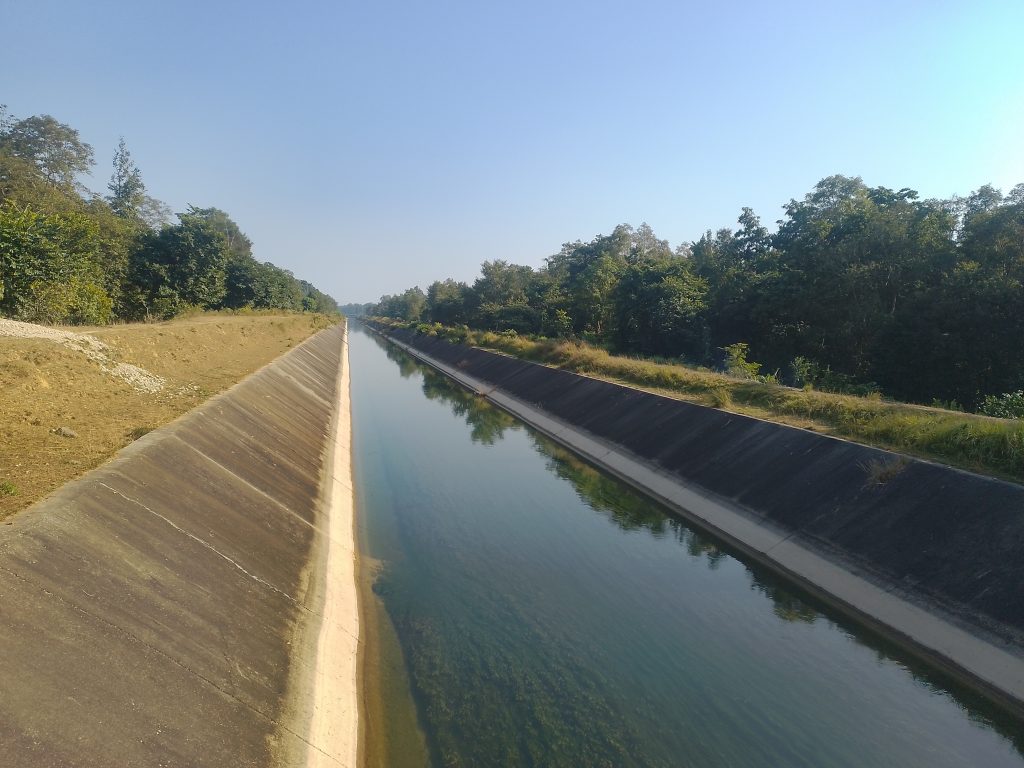
April 27, Kathmandu: The western main canal of the under-construction Sikta Irrigation Project has emerged as a growing threat to wildlife, raising serious conservation concerns. Animals such as spotted deer, antelope, blue bulls, and wild boars are increasingly getting trapped and dying in the canal while attempting to access water.
A significant stretch of the canal passes through forested areas, including the Banke National Park, community forests, national forests, and government-managed Chakla forests. These habitats are home to diverse wildlife, making the canal a frequent crossing and drinking point—and, unfortunately, a danger zone.
With the onset of the dry season, incidents have been rising. According to forest officials, animals are drawn to the canal in search of water but often cannot escape due to its steep, concrete structure. In a recent incident, four spotted deer were trapped in the canal within the Harlaphanta Community Forest area. A joint effort by local residents, forest officials, and park authorities successfully rescued them and released them back into the wild.
However, not all cases end safely. In another incident, three individuals were arrested after killing a deer trapped in the canal and attempting to take its meat home. They were apprehended within the forest area by park authorities, forest officials, and locals.
Forest officials say that, beyond thirst, ongoing forest fires are also driving wildlife toward the canal. As animals flee burning habitats, they often end up falling into the waterway. “The canal runs through dense forest areas with a high presence of wildlife,” said a senior forest officer. “It is not wildlife-friendly, and hundreds of animals have already been trapped. While some are rescued, others fall victim to poaching.”
Although artificial ponds have been constructed in forest areas to provide water, they remain insufficient, especially during peak dry months. Some drinking points (ghats) have been built along the canal, but locals say they are neither safe nor reliable.
Community leaders suggest that building well-designed access points and installing protective fencing along both sides of the canal—except at designated safe drinking spots—could significantly reduce wildlife casualties.
As development and conservation intersect in this region, experts stress that making infrastructure wildlife-friendly is no longer optional—it is essential to protect the fragile ecosystem that depends on it.






Comments