


Economic diplomacy at the heart of Nepal’s foreign policy: Foreign Affairs Minister Khanal
Kathmandu: Foreign Affairs Minister Shishir Khanal has said economic diplomacy has become the central pillar of Nepal’s foreign policy, with the government’s focus on improving people’s living standards through trade, investment and sustainable development.
Addressing an international conference titled “China and South Asia in a Multipolar World: China-India-Nepal Trilateral Relations in a Developed Regional System” in Lalitpur on Friday, Khanal said the objective of economic diplomacy is to create opportunities for trade, investment, employment, entrepreneurship, tourism, technology, innovation and sustainable development.
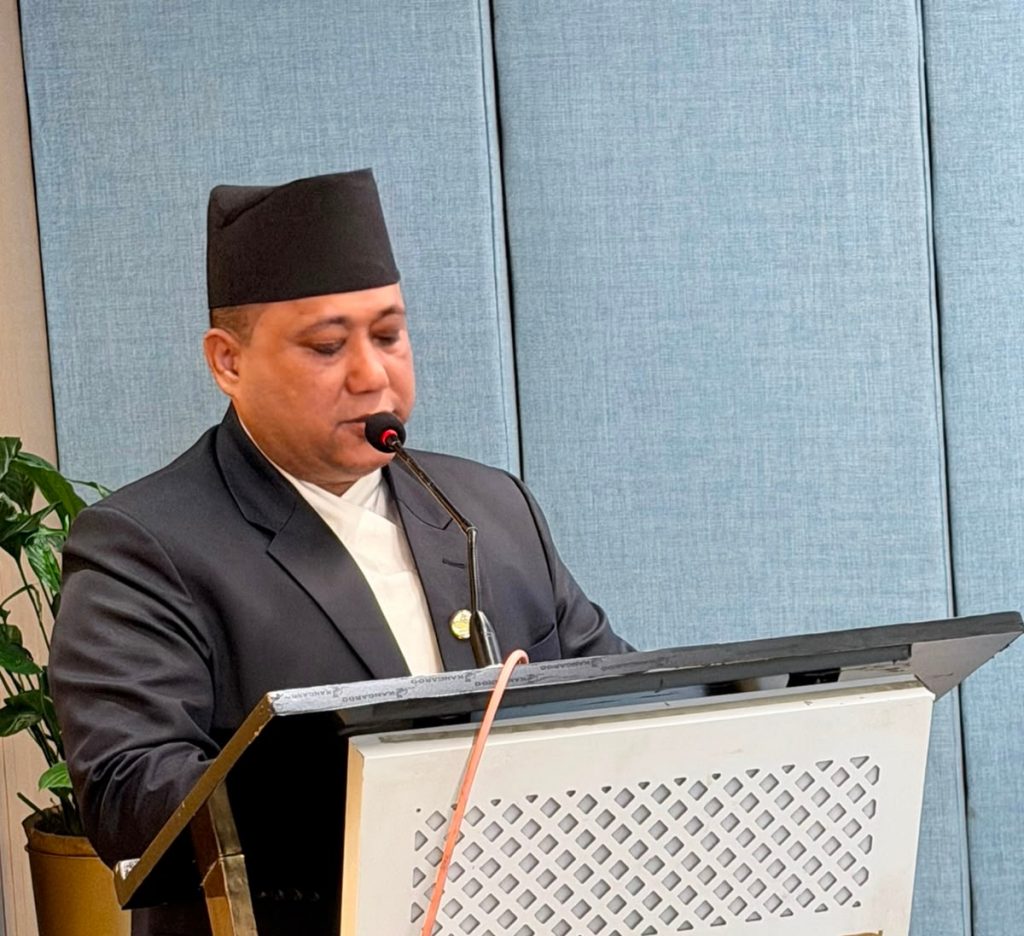
According to the Foreign Minister’s Secretariat, Khanal said Nepal can serve as a dynamic bridge to strengthen economic, trade and people-to-people cooperation between China and South Asia. He said Nepal remains committed to the principles of sovereign equality, mutual respect, mutual interests and mutual concerns in its relations with both neighbouring countries.
Highlighting Asia’s rapid economic transformation, the Foreign Minister said it has created unprecedented opportunities for shared prosperity and stressed that cooperation is the most reliable path to sustainable development and long-term economic growth.
“Economic diplomacy has become a central priority of our foreign policy. Nepal is ready to cooperate with all friendly countries for sustainable, inclusive and resilient development,” Minister Khanal said.
He noted that the economic growth of China and India has opened new opportunities for neighbouring countries, including Nepal, to expand trade, attract investment, strengthen infrastructure and connectivity, promote tourism and deepen economic cooperation.
Minister Khanal said that despite South Asia’s enormous economic potential, regional economic integration has yet to meet expectations. He added that stronger connectivity, easier trade, increased investment flows and resilient supply chains would help unlock the region’s prosperity.
“The success of our cooperation should not be measured by the number of agreements we sign, but by the opportunities we create for our citizens,” he said.
Reiterating that the government has placed economic transformation at the centre of its national agenda, Khanal said priority is being given to quality investment, infrastructure development, export promotion, tourism, clean energy, digital transformation, innovation and private sector development.
He said Nepal views the development of China and India as an opportunity for its own economic progress and aims to transform the country from a landlocked nation into a dynamic bridge linking China and South Asia.
The Foreign Affairs Minister also highlighted Nepal’s soft power, citing the birthplace of Lord Buddha, the spiritual legacy of Guru Padmasambhava, Mount Everest and other UNESCO World Heritage sites as unique national assets.
He called for stronger regional cooperation in energy security, climate action, digital transformation, research, innovation and people-to-people exchanges. He also stressed the importance of expanding collaboration among universities, research institutions and academic organisations.
Emphasising the need to build partnerships based on trust, mutual respect and shared interests in an increasingly multipolar world, Khanal said Nepal remains committed to playing a constructive and positive role.
The conference was jointly organised by the Nepal Institute for International Cooperation and Engagement and the Center for South Asian Studies of Fudan University.





Comments