


Strict water management, key prerequisite for resilient food systems: Israeli Ambassador Bass
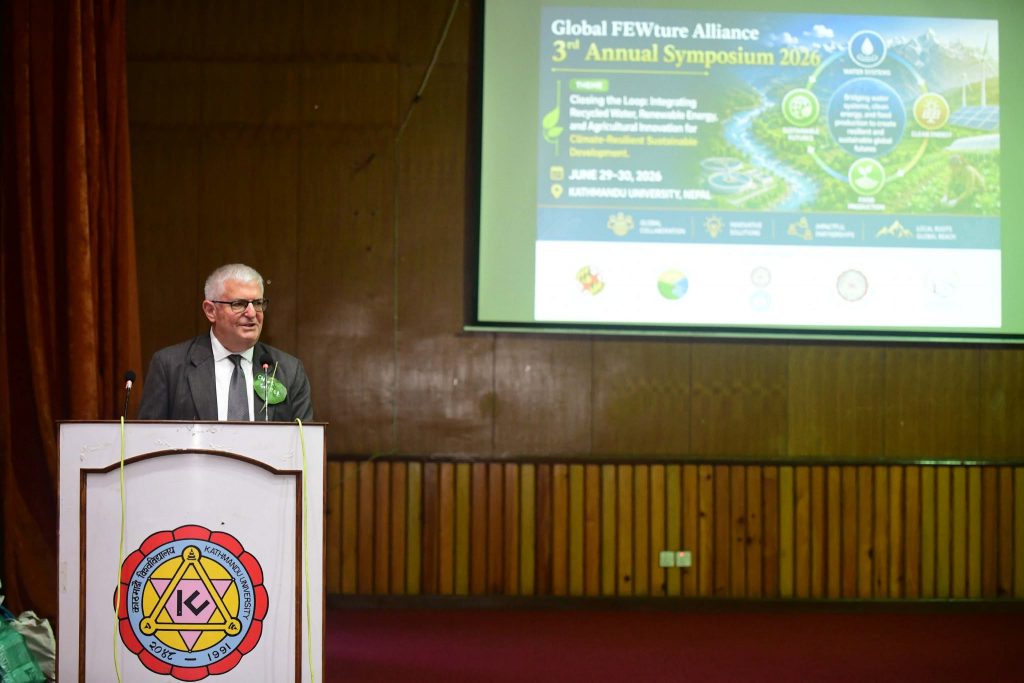
June 30, Kathmandu: The Israeli Ambassador to Nepal, Shmulik Bass, has urged a fundamental shift in resource management, declaring that establishing a strict water economy is now the critical prerequisite for securing global food security.
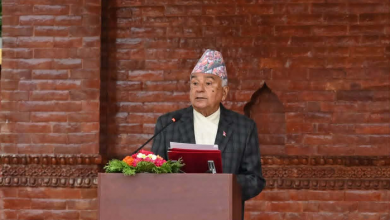
Speaking at the opening ceremony of the Global FEWture Alliance 3rd Annual Symposium 2026 at Kathmandu University in Dhulikhel, Ambassador Bass stressed that every single litre of water must serve a distinct purpose to build resilience against escalating climate challenges.
The two-day international summit, running from June 29 to 30, 2026, focuses on integrating recycled water, renewable energy, and agricultural innovation for climate-resilient sustainable development.
The conference outlines a circular nexus bridging water systems, clean energy, and food production to create sustainable global futures. The framework emphasizes global collaboration, innovative solutions, impactful partnerships, and local roots to achieve global reach.
Addressing the audience, Bass said that the boundaries of sustainable agriculture are already expanding. He noted that emerging sectors like alternative proteins, cellulosic agriculture, and microalgae are no longer futuristic curiosities, but viable pathways that directly meet ecological limits and nutritional needs.
The envoy praised immediate, practical applications of this technology, highlighting a newly deployed wastewater system utilizing algae that was recently installed at an educational institution in Kavre .
Ambassador Bass concluded by stating that the future of water and food security will not be decided by remaining natural resources alone. Instead, he maintained that long-term survival depends on how wisely nations deploy human creativity, policy frameworks, and shared international investments.
The symposium, co-organized by the University of Maryland and Kathmandu University, continues through Tuesday with a focus on implementing decentralized, climate-resilient systems across rural communities.


Comments