

High-level task force to address needs of martyr families
Kathmandu: A high-level task force will be formed immediately in consultation and coordination with the families of martyrs and the injured to ensure interim relief, compensation, free health treatment and psychosocial counseling as well as meaningful memorialization.
This has been agreed in the 10-point agreement reached between the Gen-Z side the government today. Accordingly, in line with the collective demands of the families of martyrs and the injured of the Gen-G movement, a separate permanent commission will be formed to promote good governance, prevent corruption and end impunity in the country.
Likewise, the Commission of Inquiry on the incidents of September 8 and 9 formed by the Government of Nepal will be mandated to also suggest necessary institutional reforms to investigate, prosecute and prevent recurrence of the incidents.
A distinguish shall be made between the incidents that occurred during the people’s movement and the violent acts committed by other individuals or groups in a well-planned and organized manner with criminal intent. Furthermore, the person who is not found to have to been involved in the latter acts shall be immediately released from custody and the cases filed against them shall be withdrawn, as per the report of the Commission of Inquiry.
Similarly, no criminal case shall be investigated or prosecuted against anyone for participating in political protest activities related to the people’s movement.
A separate mechanism will be formed to study and recommend necessary institutional reforms in the relevant laws and security agencies.
Another high-level commission shall be formed to impartially investigate and make recommendations on ending political, policy and institutional corruption, politicization of public institutions and appointment based on party-based sharing.
Agreement has also been reached to ensure free, fair, peaceful and fearless elections through necessary legal, technical and institutional infrastructure development, with priority to make it accessible for all.
Arrangements will be made for voters temporarily residing in non-district and inter-constituency areas to vote in the upcoming elections from the district where they are located. Policy, legal and institutional infrastructure will be developed to ensure the voting rights of Nepali citizens outside the country, including students.
The option “None of the Above” or NOTA will be included in the ballot paper while legal provisions will be made to ensure that only those who are selected through primary elections within a political party can be candidates for the election. Provisions will be made to ensure that the chairperson or president of a political party can serve a maximum of two terms.
Likewise, a high-level “Constitution Amendment Suggestion Commission” will be formed with the participation of stakeholders, including independent experts, Gen-Z and youth, to identify, study and analyze the issues of constitutional, legal and institutional reforms that need to be made to ensure good governance in the country, while maintaining the basic tenets of the values of constitutionalism.
The Commission shall review the ten years of implementation of the Constitution and identify the achievements and shortcomings of the implementation and provide concrete suggestions for the effectiveness of its implementation.
Reforms shall also be made to ensure representation of Dalits, indigenous peoples, Madhesis, Tharus, Muslims, underprivileged classes, minorities, marginalized, people with disabilities, gender and sexual minorities, farmers, workers, citizens of oppressed or backward regions and economically disadvantaged Khas Aryas.
The government will make necessary reforms, adjustments and modifications to its methods, procedures, laws, technology and mechanisms to ensure transparency in its activities, decisions and expenditures. All reports of the investigation and inquiry commissions formed to study and investigate past human rights violations and corruption-related investigations in Nepal will be made public in accordance with the prevailing law.
All appointments to public positions in the Government of Nepal will be made in a way to ensure equality of opportunity and to end nepotism, favoritism and discrimination.
Illegal regulation, prohibition or biased censorship in freedom of expression, information flow and communication on the Internet and digital media shall be stopped. Illegal surveillance and misuse of digital data of ordinary citizens by the state or third parties shall be prevented.
In addition, a Gen-Z Council shall be formed to contribute to the government in the operation of governance, to provide advice, suggestions and support to the Government for good governance, sustainable development and prosperity.
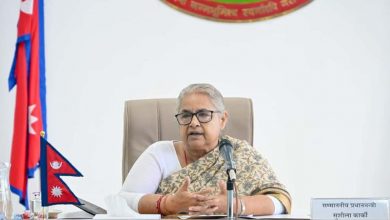
Prime Minister Sushila Karki and Bhoj Bikram Thapa, on behalf of those who attained martyrdom and were injured during the Gen Z movement, have signed the agreement.


Comments