


Test of locally developed Cell Broadcast System successful
Kathmandu: A technical test of a Cell Broadcast System (CBS) developed in Nepal with the objective of delivering timely early warnings to citizens in disaster-prone areas via mobile phones has been successfully conducted.
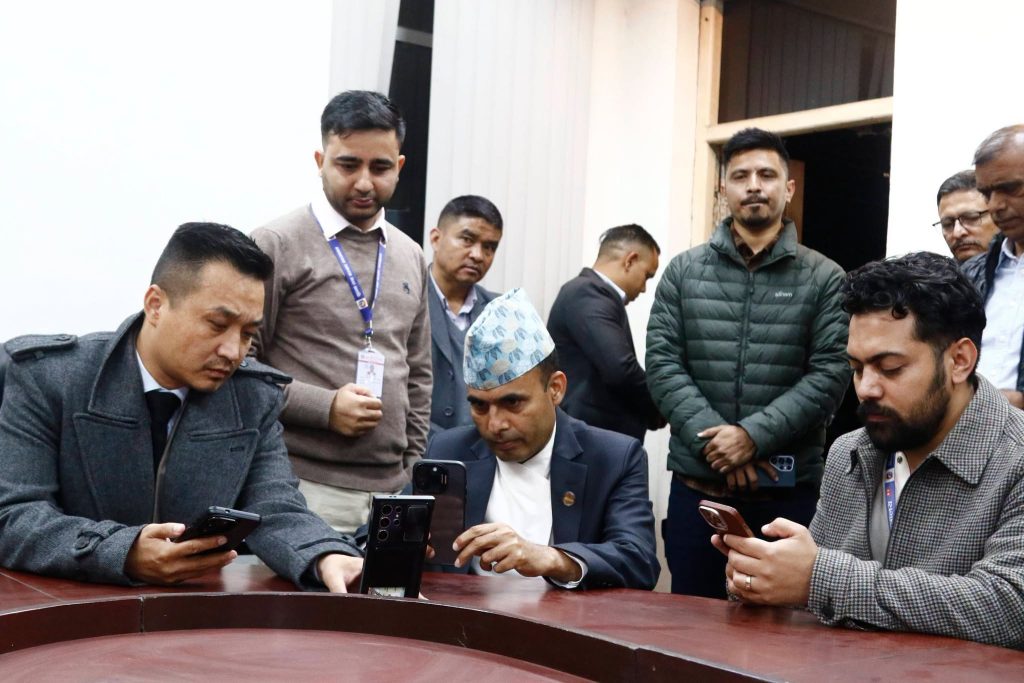
The test was carried out today through the collaboration of the Ministry of Home Affairs, the National Disaster Risk Reduction and Management Authority (NDRRMA), the Nepal Telecommunications Authority, and Nepal Telecom, under the coordination of the Ministry of Information and Communications.
In the presence of Minister for Information and Communications, Dr Bikram Timilsina, and Minister for Home Affairs, Sudhan Gurung, a test message was broadcast from a Nepal Telecom tower located in Balambu. During the test, a message stating “This is a test message” (in both Nepali and English languages) was sent to mobile phones located within a specific geographical area in Kathmandu. Upon receiving the message, the mobile phones emitted a distinct alert sound different from standard notification tones, accompanied by vibration.
The Cell Broadcast System enables the simultaneous transmission of emergency information to all mobile phones located within a designated geographical area. This process does not require sending individual messages to each person’s mobile number, nor does it rely on an internet connection.
Since the information is delivered directly to mobile phones connected to the service provider’s network within the targeted area, the system can effectively transmit messages even during periods of extreme network congestion. Another key feature of this system is its ability to deliver information to a specific geographical area without the need to collect users’ personal mobile numbers or other private details.
Through the use of this technology, early warnings and essential safety instructions regarding potential disaster risks such as floods, landslides, glacial lake outburst floods (GLOFs), earthquakes, and adverse weather can be delivered in a timely manner to residents in vulnerable areas.
The plan is to further refine the system based on the technical results and insights gained from initial testing, and subsequently expand it in a phased manner to regions facing high disaster risk.
This system is expected to play a significant role in alerting citizens in a timely manner during disasters, providing necessary guidance for relocating to safe areas, and minimising potential loss of life and physical damage.
RSS




Comments