

Govt makes arrangement of search, rescue and treatment in coordination with state mechanisms: PM Shah
Kathmandu: Prime Minister Balendra Shah has shared that the government had started consolidating information, coordinating and monitoring through ‘Joint Operation Committee’ of the Nepali Army, the ‘Quick Action Team’ of the National Disaster Risk Reduction and Management Authority and ‘Rapid Response Team’ of the Office of the Prime Minister and Council of Ministers immediately after the Bhotekoshi flood.
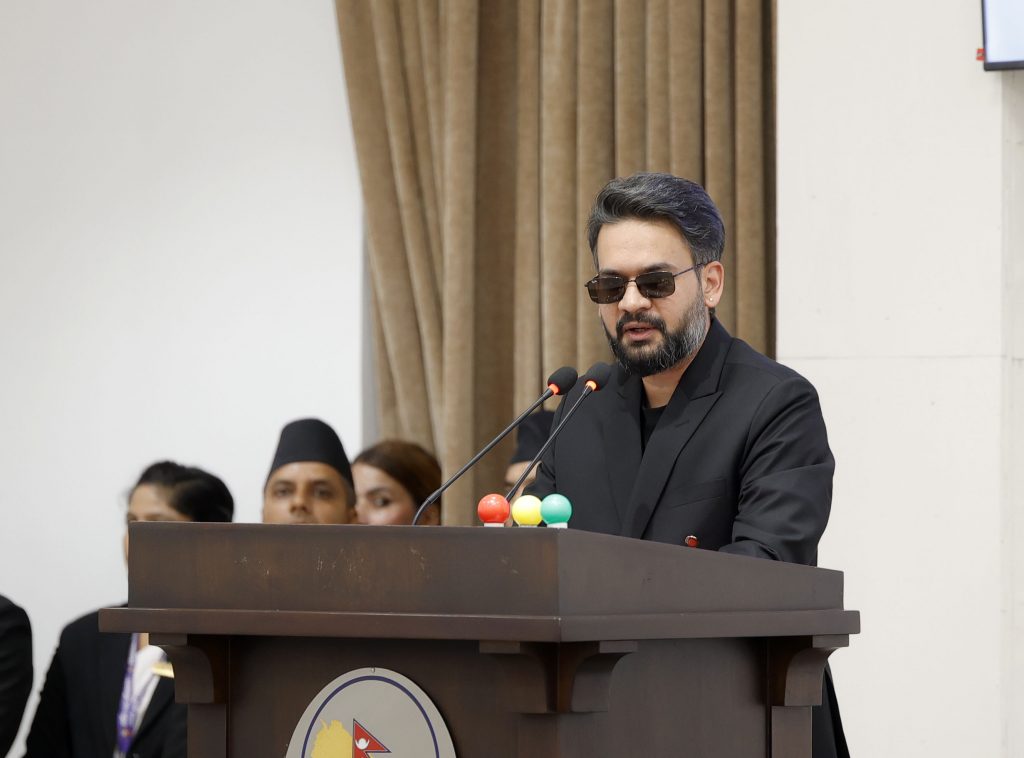
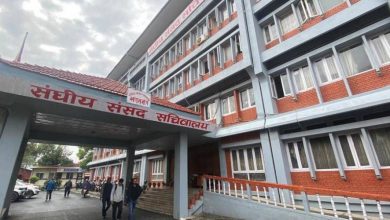
Addressing today’s meeting of the House of Representatives, Prime Minister mentioned that the injured people were brought to Kathmandu for treatment along with search and rescue operation.
“We allocated 100 beds in National Trauma Centre and Bir Hospital and kept other all big hospitals standby,” he opined.
Stating that medical teams in coordination with Nepal Scout, World Health Organization, Nepal Red Cross along with the government were deployed at flood-hit areas, the Prime Minister viewed that they did coordination with Blood Transfusion Service Centre, health ministries in Bagmati and Gandaki provinces, Nepal Red Cross Society, Lions Clubs, as well as other organisations for emergency health services and avoid blood crisis.
A team of Minister for Information and Communications, Dr Bikram Timilsina, headed towards the flood-affected areas via land route at 3:00 pm on August 26 and continuous briefing was briefing regarding the situation in affected areas have been received from all mechanisms of the state since then, he underlined.
He argued that a public appeal was made for contribution to the Prime Minister Natural Disaster Rescue Fund and Prime Minister Relief Fund for affected areas, adding managing safely those who became homeless is another responsibility not only search, rescue and treatment.
Sharing that eight trucks of relief materials were transported to flood-hit areas on Wednesday midnight itself, PM Shah underlined that voice, data and SMS services were provided free of cost to mobile users of affected areas on the same night.
He argued that a team comprising Minister for Infrastructure Development reached the flood-hit area via land route next day for onsite inspection, stating, “A team of Chief Minister of Bagmati Province had also reached the flood-affected areas. A necessary decision was taken by holding emergency meeting with cabinet ministers on the same day returning from affected areas. We released Rs 10 million each for Rasuwa and Nuwakot districts and Rs 5 million for Dhading.”
Stressing that Emergency Response Team was formed for search, rescue of foreign nationals and consular support, Prime Minister Shah mentioned that a directive was issued for employees working in flood hit districts not to leave their working place as well as search, rescue, treatment and relief operation has been making more effective.
Total 13,295 security personnel of the Nepal Army, Nepal Police and APF Nepal were mobilized till 8:00 pm on August 26 as well as 351 were rescued through 69 flights, added PM Shah.
“Priority was given to critically injured, pregnant, newly mothers, children, senior citizens and disabled persons during flights. Preparation was made to shift 3,500 flood affected people at schools and public community building there,” he said.
Prime Minister Shah informed the House that relief materials were sent to the National Emergency Warehouse at Tribhuvan International Airport, the Nepali Army’s Maithil Barracks in Battar, Nuwakot, and the Baireni Barracks in Dhading, and arrangements were made to send them to the affected areas based on priority.
He said that a field hospital set used in disaster management was sent to Trishuli, an additional 10 trucks of relief materials from Kathmandu were sent to the affected areas, and in the cabinet meeting held the same day, it was decided that the Prime Minister and ministers would deposit one month’s salary into the Prime Minister’s Relief and Rescue Fund.
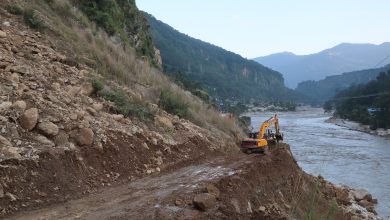
“Efforts were also started to connect the damaged roads to the affected areas along with search, rescue, treatment, and relief distribution. Right after the incident, we had intensified the rescue operations in the affected areas. Until a little while ago, we have rescued 11,993 people,” he said.
PM Shah said that out of the 916 people who were missing and the 292 injured who were rescued and admitted to various hospitals, 182 people had been sent home after treatment until a little while ago. He added that health workers are also working to improve the condition of the remaining injured.
Prime Minister Shah mentioned that a team including experts from Kathmandu has also been sent to treat the affected area’s residents, and along with treatment, they are also providing counseling services to the people in the affected areas.
He said, “We are running various campaigns to prevent any epidemic from spreading in the affected areas. Information is also being circulated through different means to prevent disease outbreak in the affected areas.”
Prime Minister Shah mentioned that necessary training was also provided to provincial and local health officials to effectively implement the ‘Post-Disaster Outbreak Surveillance and Response Plan’.
RSS
Comments