


Media must prioritise public interest and citizens’ rights: Communication Minister Dr Timilsina
Kathmandu: Minister for Information and Communication Dr Bikram Timilsina has said the media sector should keep citizens’ right to information, freedom of the press, freedom of expression and public interest at the centre of the communication system.
Addressing the 24th conference of the Asia-Pacific Institute for Broadcasting Development (AIBD) in Kathmandu, organised by Public Service Broadcasting (PSB) Nepal and the Association of Community Radio Broadcasters Nepal, Minister Timilsina said rapid advances in technology are bringing significant changes to the media sector.
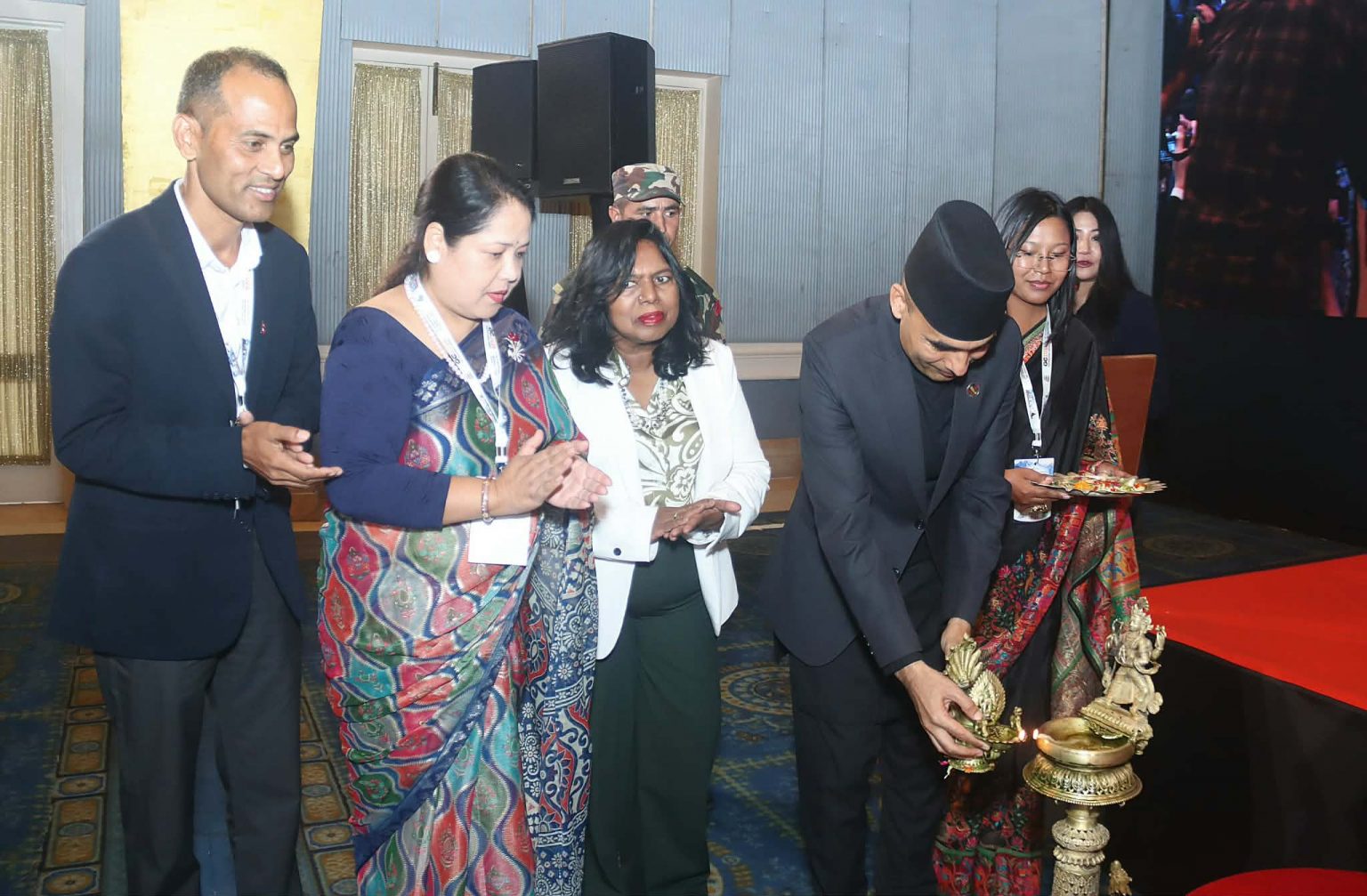
He stressed that the basic principles of journalism and communication should remain unchanged despite technological transformation.
He emphasised the need to strengthen media credibility, factual accuracy, editorial responsibility and democratic values while embracing artificial intelligence (AI), digital platforms and other emerging technologies.
According to Minister Timilsina, freedom of the press must go hand in hand with responsibility. He said providing accurate, fair, balanced and accountable information to citizens is the primary responsibility of the media.
He said misinformation and propaganda should not be addressed only through bans or restrictions. Instead, he called for stronger journalism, media literacy, transparency, effective professional standards and measures to increase public trust.
The Minister said the role of responsible media becomes particularly important during crises, natural disasters and public health emergencies. Reliable and timely information from media outlets, he said, can help protect citizens and maintain public trust and social stability.
Minister Timilsina noted that many of the challenges facing the media sector are shared across countries. He said AI, misinformation and propaganda can cross national borders, while climate change and natural disasters also have transnational impacts.
He stressed the need for countries to exchange knowledge, technology and experience to address these challenges.
He also pointed to growing challenges related to the financial sustainability of media organisations, changing audience behaviour and declining public trust. He said these challenges are particularly significant for public service broadcasting, which must fulfil its public-interest responsibilities while operating in an increasingly competitive media environment.
The Minister said AI, digital platforms, mobile connectivity and streaming services are transforming the entire communication chain—from content production and distribution to interaction with audiences. He described these changes not only as challenges but also as opportunities to reach younger generations through digital platforms.
He said public-interest news, educational materials and awareness content should be effectively delivered through the digital platforms used by young people, while their voices, ideas and creativity should also be incorporated into public broadcasting.
Communication Minister Timilsina stressed that AI cannot replace human editorial judgement, fact-checking, accountability and professional ethics. Although AI can assist in content production, he said the ultimate responsibility for the accuracy, context, social impact and public interest of content remains with human editors and media professionals.
He identified public trust as the media sector’s most important asset, particularly at a time when AI-generated content and deepfake technology can make false information appear authentic. Media organisations that can combine technological capability with journalistic credibility, he said, will be better positioned for the future.
The Minister also highlighted Nepal’s experience with community radio. He said Nepal was the first country in South Asia to establish an independent community radio, with the movement beginning with Radio Sagarmatha and subsequently expanding across the country.
According to him, community radio has helped connect communities across the Himalayas, hills and Terai and has provided space for voices that might otherwise remain outside public debate.
He said community radio has also played an important role in disseminating timely and reliable information in local languages during disasters, crises and health emergencies. Its contribution has been particularly significant during earthquakes, floods, landslides and epidemics, he added.
Minister Timilsina said digital transformation should not be understood simply as the adoption of new technology. It should also involve strengthening journalistic credibility, professionalism, fact-checking, public accountability and citizens’ trust.
He called on public service broadcasters to establish themselves as trusted institutions capable of providing accurate and reliable information amid the growing spread of misinformation, misleading content and AI-generated material.
He also emphasised the need to make public service broadcasting more relevant to younger audiences and to ensure equal representation of people from rural and remote areas, marginalised communities and different linguistic groups.




Comments