


Economic Survey for FY 2082/83 shows positive economic indicators
Kathmandu: Though some positive indicators have been seen in the country’s economy, some structural challenges remain, reads the government’s report.
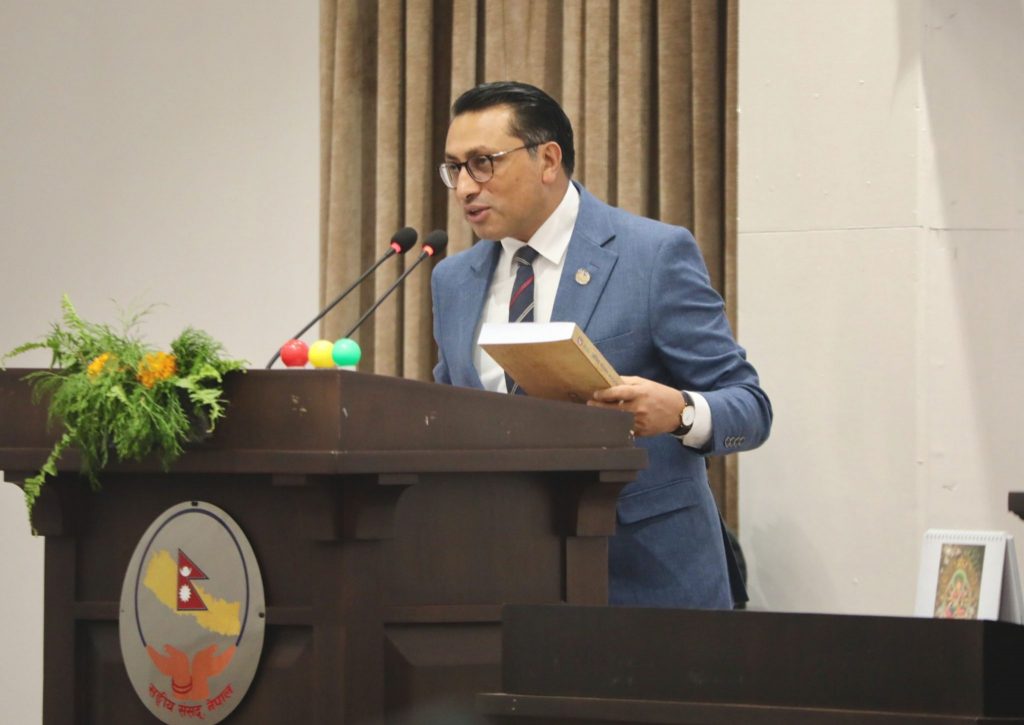
The Economic Survey of the Fiscal Year 2082/83 BS unveiled by the government has shown that Nepal’s external sector is strengthening, inflation is under control and remarkable increase in remittances.
But weak capital expenditure, increase in trade deficit, expansion of public debt, and the sluggish loan disbursement in the private sector have been seen as major challenges of the economy.
The government has prepared the base of the budget for the coming fiscal year, presenting the overall picture of social infrastructure, good governance, public finance, foreign exchange reserves and the external sector.
The country’s economy has been projected to expand by 3.85 per cent in the current fiscal year. Similarly, the survey estimates the size of Nepal’s economy at Rs 6.6 trillion, while per capita gross national income would reach 1,535 US dollars.
Province-wise, Bagmati Province would have the highest contribution of more than 36.7 per cent to the national gross product. Though federal revenue has increased by 3.2 per cent, there is no expected improvement in capital expenditure.
The government mobilised around Rs 300 billion in public debt through internal and external loans till March 14. The Survey mentioned that the fiscal balance is said to be in a deficit of Rs 59 billion and the primary balance in a deficit of Rs 9 billion during the period.
The public debt has reached Rs 2.878 trillion till mid-March, which is equivalent to 43.6 per cent of the GDP. The trade deficit increased by 11.2 per cent and reached Rs 1.098 trillion.
Similarly, remittance inflow increased by 37.7 per cent and reached Rs 1.450 trillion, while the balance of payments position is at a surplus of Rs 658 billion, and the current account is at a surplus of Rs 553 billion.
Likewise, foreign exchange reserves stood at Rs 3.414 trillion, which is sufficient to import the goods and services for 18.5 months, added the Survey.
Although there is sufficient liquidity in the banking sector, loan inflow towards the private sector has been limited to 6.7 per cent. It has been indicated that private investment and economic activities are still sluggish.
RSS





Comments