


Upcoming budget will be transformative: Finance Minister
Kathmandu: Finance Minister Dr Swarnim Wagle said the government would bring a transformative budget by ending the traditional style.
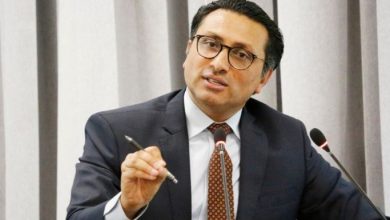
At a policy discussion organised today by the Society of Economic Journalists-Nepal (SEJON) in order to provide feedback to the budget for the upcoming fiscal year 2083/84, Finance Minister Wagle clarified that a transformative budget would be brought by shunning old patterns and practices.
He stated that the budget would be results-oriented and reform-focused. Commenting on the exaggeration and misconceptions among the general public regarding the budget, he expressed the view that the budget should be understood as a practical document for the government’s income-expenditure management.
All ministries, according to him, have been instructed to prepare plans within the limit of around Rs 1890 billion as determined by the National Revenue Estimation Committee for the upcoming budget formulation.
However, he also noted that the current ceiling is insufficient for economic transformation. Highlighting that the trend of introducing budgets larger than revenue capacity has caused problems in the past, he informed that for the next fiscal year, mandatory obligations are amounting to around Rs 1330 billion, while the country’s revenue capacity is only about Rs 1180 billion.
Finance Minister Wagle stated that such a situation poses a challenge even to fulfil mandatory obligations and mentioned that there are certain responsibilities and limits in deploying loans. Indicating that programmes that do not yield results and are ineffective will be cut due to limited resources, he stated that the policy of strategically increasing public expenditure to mobilise the economy will be adopted. He also noted that investment in the social sector would be given equal priority.
Despite limited resources, he stated that the budget will be formulated to steer economic management focusing on good governance, smooth service delivery, and job creation. He mentioned that tax reform will be prioritised to strengthen revenue mobilisation, adding that the government is sensitive to complaints that the existing tax rates are unrealistic.
A review will be conducted regarding high income tax and customs rates, and measures will be taken to reduce the tax burden. “The government does not adhere to the traditional notion that revenue decreases when taxes are cut,” he said. Clarifying that the election manifesto of the ruling party will guide budget formulation, he said the protection of the middle class and entrepreneurial businesses will be central. Shedding light on decreasing foreign aid due to weakness in spending capacity, he informed that the government is focused on improving implementation capacity.
“Programmes that reflect crony capitalism need to be cut to send a message of good governance,” he said. “Portraying the private sector as the main driver of the economy, he cautioned that honest businesses should not be intimidated, but the government will act firmly against irregularities conducted in the name of business”.
RSS

Comments