


From Classrooms and Youth Participation to Nepal’s Diplomatic Frontline: Shisir Khanal’s Challenges and Opportunities
Khanal steps into office at a moment where Nepal’s foreign policy must respond to immediate human realities, not just abstract strategy.
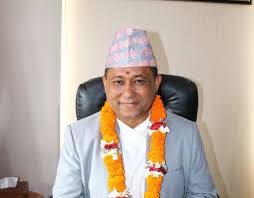
March 28, Kathmandu: The appointment of Shisir Khanal as Nepal’s Foreign Affairs Minister marks a notable departure from tradition. In a system long dominated by political veterans, Khanal brings a fundamentally different background—one rooted in education reform, institution-building, and civic leadership.
At a time when Nepal’s foreign policy often appears reactive, his elevation raises an important question: can a domestic education reformer reshape how Nepal engages with the world?
A Career Built in Classrooms among Youths, Not Corridors and Lobbies of Power
Before entering electoral politics, Khanal was best known as the co-founder and leader of Teach For Nepal—one of the country’s most influential education reform initiatives.
Established in 2012, Teach For Nepal sought to address structural inequalities in public education by placing outstanding young graduates into under-resourced community schools. The idea was simple but ambitious: bridge the gap in quality education while cultivating a generation of leaders committed to public service.
Under Khanal’s leadership, the initiative evolved beyond a teaching program into a broader movement focused on leadership, policy engagement, and systemic change.
Building an Ecosystem of Reform
Khanal’s work extended into initiatives such as Anubhuti and Sarvodaya, reflecting a wider effort to shape youth leadership and civic participation.
These platforms highlight a consistent philosophy: national development depends not just on policy reform, but on how citizens think, engage, and participate. Khanal’s career has thus been about building ecosystems—not isolated interventions.
A Brief but Indicative Political Stint
Khanal entered government as Minister of Education in 2023. Though brief, his tenure reinforced his long-standing priorities—modernising education laws, strengthening accountability, and aligning Nepal’s systems with global standards.
He entered politics with something rare: deep sectoral experience before holding office.
From Domestic Systems to Foreign Policy
Khanal’s transition to foreign affairs reflects a broader worldview shaped by three ideas:
Strategic autonomy—a foreign policy guided by Nepal’s own priorities.
Domestic strength as diplomacy’s foundation—credible states are built at home.
Network-driven engagement—leveraging diaspora and global partnerships beyond formal diplomacy.
The Political Context
Khanal is a leading figure within the Rastriya Swatantra Party, representing a reform-oriented political wave.
Elected from Kathmandu-6, his rise reflects a constituency that demands competence, delivery, and a break from traditional political patterns.
The Challenges Ahead
Khanal steps into office at a moment where Nepal’s foreign policy must respond to immediate human realities, not just abstract strategy.
The most pressing concern lies in West Asia.
Hundreds of thousands of Nepalis live and work in countries such as Qatar, Saudi Arabia, the UAE, Bahrain, and Kuwait. The current instability in the region directly affects Nepali lives, livelihoods, and remittance flows.
For Nepal, foreign policy here is not distant diplomacy; it is a matter of citizen protection.
Ensuring the safety of migrant workers, maintaining stable labour agreements, and crisis response and evacuation mechanisms will likely be among Khanal’s most urgent responsibilities.
Beyond this, he must also navigate:
- Economic dependencies tied to labour migration
- Institutional inertia within the foreign ministry
- The need to modernise Nepal’s diplomatic approach
Unlike education reform, foreign policy demands immediate responsiveness under pressure.
A Test Case for a New Kind of Leadership
Shisir Khanal’s appointment matters because it challenges the traditional profile of a foreign minister.
He represents a shift—from bureaucratic continuity to reform-oriented leadership, from domestic systems thinking to external engagement.
If Nepal is to build a foreign policy that is both autonomous and citizen-centred, it will depend on whether leaders like Khanal can translate reformist instincts into diplomatic outcomes.
The real test begins now.



Comments