


Embassy of Israel marks International Holocaust Remembrance Day in Kathmandu

January 29, Kathmandu: The Embassy of Israel in Nepal marked the United Nations International Holocaust Remembrance Day on Tuesday by organising a memorial programme in Kathmandu, commemorating the victims of the Holocaust.
The event, titled “Zikaron Bassalon – Memory in the Living Room,” was held under this year’s global theme, “Holocaust Remembrance for Dignity and Human Rights.” The programme was attended by senior government officials, members of the diplomatic corps, media representatives and friends of Israel.

Addressing the gathering, Israeli Ambassador to Nepal Shmulik Arie Bass said racial discrimination and the desire to exterminate an entire people must never be allowed to happen again, describing the Holocaust as a black mark on human history.

Chairperson of the National Human Rights Commission, Top Bahadur Magar, said the Holocaust had a profound impact on the evolution of international human rights law. He noted that the United Nations adopted foundational instruments in 1948, including the Universal Declaration of Human Rights and the Convention on the Prevention and Punishment of the Crime of Genocide, to which Nepal is a state party.
Ambassador of Germany Udo Volz and Ambassador-designate of Australia Simon Ernst also shared reflections during the programme.
Holocaust survivor Sophia Geller delivered a personal testimony, recalling her experiences during the Holocaust. The event also featured musical performances by two Nepali students and the screening of a video message by Holocaust survivor Dugo, who marks his survival by eating falafel every January 18 as a symbol of freedom and life.
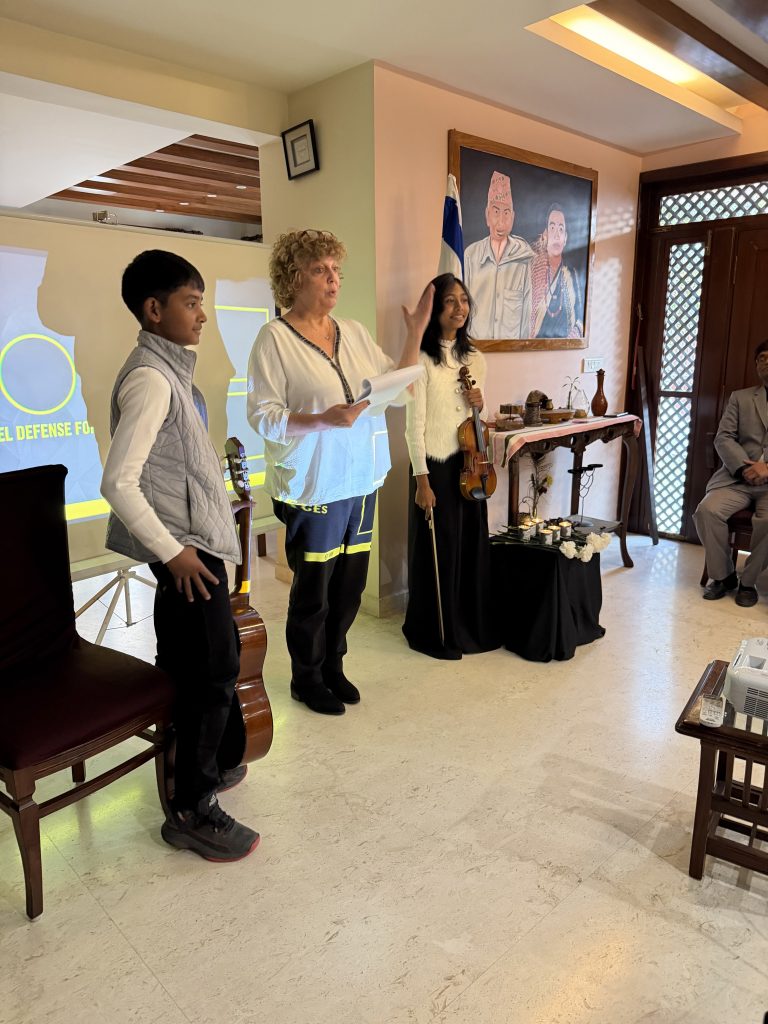
The Embassy of Israel reiterated its commitment to Holocaust remembrance and education, as well as to promoting peace, tolerance and mutual respect.
The Holocaust was the systematic, bureaucratic and state-sponsored persecution and murder of six million Jews, including 1.5 million children, by the Nazi regime and its collaborators in Europe between 1941 and 1945. With very few survivors remaining alive, preserving survivor testimonies is considered essential to passing the historical lessons of the Holocaust to future generations.
In the context of rising global connectivity and cross-border information flows, awareness of antisemitism and other forms of hatred remains relevant beyond national boundaries. Nepal has also been witnessing anti-Israel protests, which sometimes border on antisemitism, as some figures, such as Durga Prasai, have been making antisemitic remarks of late.


Comments