


Barriers to enforcement of federalism continue
Kathmandu, Dec 21: The fiscal federalism is gradually gaining a pace but structural and policy level challenges are awaiting address for effective enforcement.
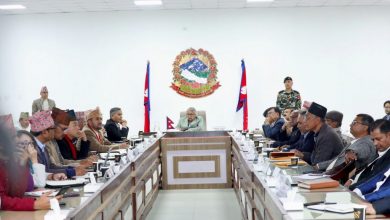
At a programme the National Natural Resources and Fiscal Commission (NNRFC) organized to release the ‘Mirror of Fiscal Federalism-2025’ in the federal capital on Sunday, the speakers shed light on the achievements of federalism, its challenges and way forward.
Chairman of the National Assembly (NA), Narayan Prasad Dahal, informed that NA was engaging in significant work relating to revenue, resource allocation and ceiling of internal loan. The first and the second Constituent Assemblies had whetted serious debates on introduction and enforcement of federalism in Nepal, he reminded, adding that the new system is gaining a pace.
He, however, said, “Sharing of resource is vital in fiscal federalism. Some of the local levels are not able to bring budgets on time. Employee management and capital spending are also serious concern.”
Dahal accused the federal government of not transferring all amount allocated for the sub-national governments on time. Similarly, the sub-national governments failed to spend the allocated budget fully. “If service delivery is improved and development activities intensified, the false narrative of ‘costly federalism’ will fizzle out,” Chairman Dahal argued.
On the occasion, President of the Federalism Strengthening and National Concern Committee under the National Assembly, Sonam Geljen Sherpa, however, argued fiscal federalism was weakened. Although even the remote villages have felt change, the devolution of power was hindering real benefit of the system to all people. “Neither the central government nor the province government is ready to devolve power to the local levels. Even the chief of local level is reluctant to hand over power to ward chair the latter is entitled to,” he said, underscoring the need of empowering local levels and forging collaborative approach in act in the spirit of federalism.
Former Chairman of the NNRFC, Balanand Paudel, expressed worry why the issues of natural resources were shadowed at the Commission. Sharing of natural resources is a very sensitive topic, he said, adding that disputes were raised even on the fundamental need like drinking water when it came to royalty sharing.
“Royalty from telecommunications should also be treated as that of the natural resources and allocation made accordingly. The distribution of conditional grant needs further clarity,” Paudel suggested, adding that wise use of public debt and widening the ceiling of internal loan for mega and national pride projects are equally important.
Former Chief Secretary Dr Baikuntha Aryal viewed the problems that surfaced in the very beginning of the federal implementation are still waiting for address. Data at government agencies need credibility and inter-agency coordination strengthened, he added.
Irrespective of the law in place for eight years to recommend fiscal equalization grant based on need of expenditure and revenue capacity, there was no clarity on these till date. “There is no clear basis to measure the need of spending at any province or local level. To address this gap, the Inter-Government Fiscal Arrangement Act and the NNRFC Act must be amended,” he suggested.
Secretary at NNRFC, Dinesh Kumar Ghimire, informed that the publication ‘mirror of fiscal federalism-2025’ was prepared based on the challenges of implementation of fiscal federalism and role various agencies need to play for strengthening the system.


Comments